
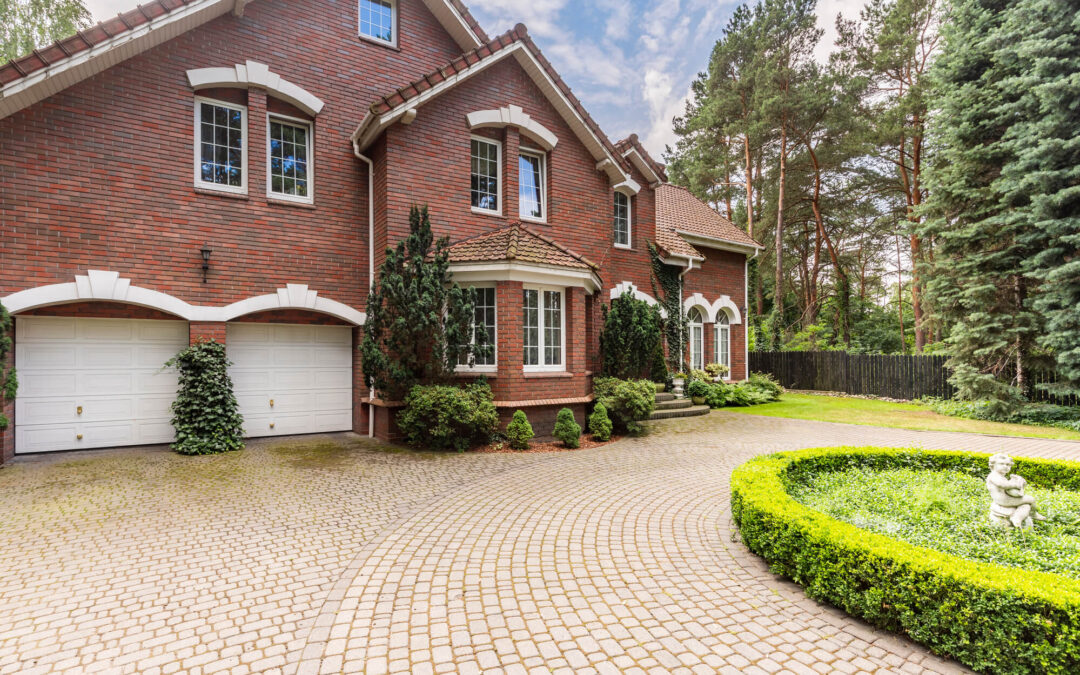
The driveway material you choose determines how your home presents to visitors and buyers, how much maintenance you’ll be managing for the next two decades, how well the surface handles your climate’s freeze-thaw cycles, and what the project will cost both upfront and over time. Most homeowners make this decision based on what they see in their neighborhood, which is a reasonable starting point but an incomplete framework. Understanding the actual characteristics and trade-offs of each option produces a choice that fits your specific home, budget, and maintenance tolerance.
What to Consider Before Choosing a Driveway Material
The right driveway material depends on four intersecting factors: climate, budget, aesthetic goals, and maintenance capacity. A material that performs beautifully in a mild coastal climate may crack repeatedly in a region with significant freeze-thaw cycling. One that looks stunning at installation may require annual sealing and periodic patching, manageable for some homeowners, consistently frustrating for others. Installation cost and lifetime cost are also different calculations. Some driveway materials have low upfront costs but require regular maintenance expenditures that make the true long-term cost considerably higher. Running the math over a twenty-year horizon often changes which option looks most attractive.
Asphalt and Concrete as Driveway Material Workhorses
Asphalt and concrete are the two most widely used driveway materials in residential applications; both are durable, widely available, and served by a deep contractor market that keeps prices competitive. Asphalt is flexible, making it more forgiving of minor ground movement and freeze-thaw stress than rigid concrete. It’s less expensive to install, and repairs are relatively straightforward. The trade-off is maintenance: asphalt should be sealed every three to five years and needs periodic patching over its lifespan. It also softens in extreme heat. Concrete is more durable and lower-maintenance. It doesn’t require sealing on the same schedule, holds its surface longer, and offers a wide range of finishes that provide significant aesthetic flexibility. In freeze-thaw climates, concrete is vulnerable to surface scaling when deicing salts are applied. A well-installed concrete driveway can last 30 to 50 years.
Gravel, Pavers, and Alternative Material Options
Gravel is the most affordable driveway material, and it has practical advantages beyond cost. It drains naturally, eliminating runoff concerns, and it’s simple to add material or re-grade when the surface develops ruts. The trade-offs are aesthetic and practical: gravel lacks the finished appearance of paved surfaces, requires periodic regrading, and loose material can migrate onto lawns. For rural settings and longer driveways, it remains a highly practical choice. Pavers represent the premium end of the market in both cost and visual impact. Pavers offer aesthetic flexibility and longevity that poured materials can’t match, and individual units can be removed and replaced without the patching challenges concrete and asphalt face. Properly installed pavers on a well-prepared base can last the life of the home. Permeable pavers and gravel systems are gaining traction where stormwater management is a concern, allowing water to infiltrate through the surface rather than run off.
Frequently Asked Questions (FAQs)
What is the most durable driveway material?
Concrete and natural stone pavers are the most durable driveway materials, with properly installed versions lasting 30 to 50 years or more. Concrete’s durability is somewhat climate-dependent; in regions with heavy freeze-thaw cycling and deicing salt use, surface scaling can shorten its effective life. Pavers on a well-compacted base match or exceed concrete longevity while offering the advantage of individual unit replacement when damage occurs.
Which driveway material is best for cold climates?
Asphalt and concrete pavers both perform well in cold climates. Asphalt’s flexibility makes it more resistant to cracking from ground movement, and it isn’t damaged by deicing salts. Concrete pavers handle freeze-thaw well when installed with proper joint sand, and damaged units can be individually replaced.
How long does each driveway material typically last?
Gravel is essentially indefinite with periodic regrading. Asphalt typically lasts 20 to 30 years with proper sealing and maintenance. Concrete typically lasts 30 to 50 years depending on installation quality and climate. Paver driveway material on a properly prepared base can last the life of the home.
Can I install driveway material myself to save money?
Gravel is the most DIY-accessible option; delivery, spreading, and compaction are within reach of a motivated homeowner. Asphalt, concrete, and pavers all benefit significantly from professional installation. Concrete in particular requires proper subbase preparation, correct mix specification, and skilled finishing to achieve its potential lifespan. Poor concrete installation fails at a fraction of what well-installed material lasts. Contractor selection matters as much as material choice.
What driveway material adds the most home value?
Concrete and pavers consistently rate highest in buyer perception and curb appeal.
Realistic Home Inspection Services offers inspections in the greater Milwaukee area. Contact us to schedule an appointment for our services.